
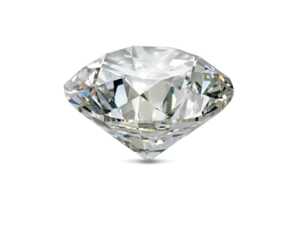
Diamond: choosing an important gemstone with a clear head, not just with emotion
The diamond is the gemstone that most often arrives in the studio already charged with expectations: promise, engagement, anniversary, family, emotional investment. Precisely for this reason, it must be chosen with calm. It is not enough to say “I want a beautiful diamond”: you need to understand which diamond is truly consistent with the piece of jewellery, the hand, the budget and the story it is meant to represent.
In this guide you will find a practical interpretation of gemmological data and the 4Cs: colour, clarity, cut and carat weight. These are technical criteria, but in the design of a piece of jewellery they become tools of choice. In my work I use them to help clients avoid being guided by just a single number, a single code or a photograph that is too perfect.
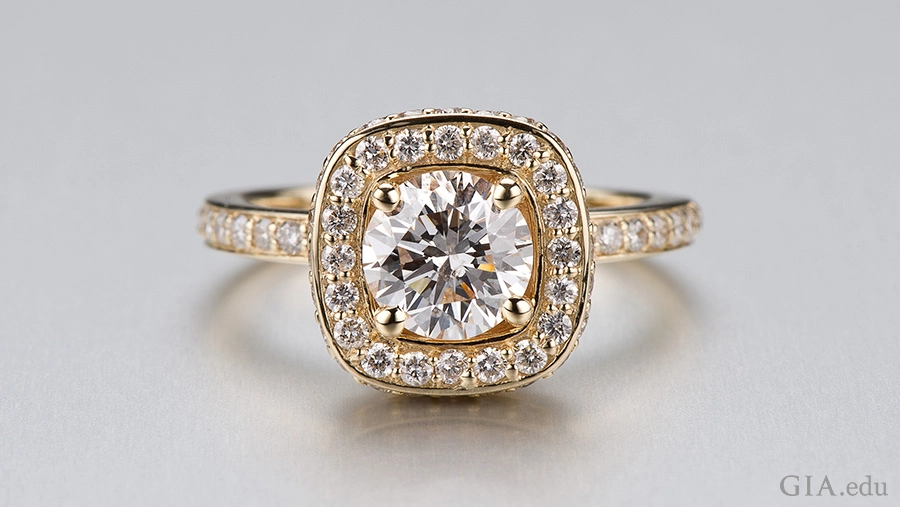
What is the diamond
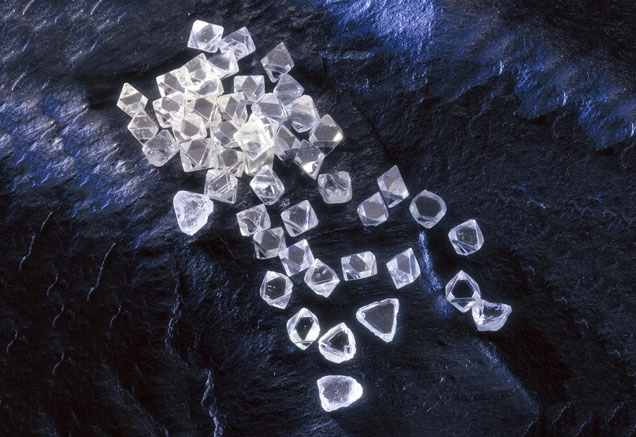
The diamond is a mineral composed of carbon. Its crystal structure is isometric: the carbon atoms are bonded in a substantially uniform way in the different directions. This combination of chemical composition, structure and deep formation gives it exceptional physical and optical properties.
The diamond is the only gemstone composed of a single element: carbon. Its composition is typically almost pure carbon; small amounts of trace elements can influence the colour or crystal shape. For this reason, two diamonds can belong to the same mineralogical species and look very different.
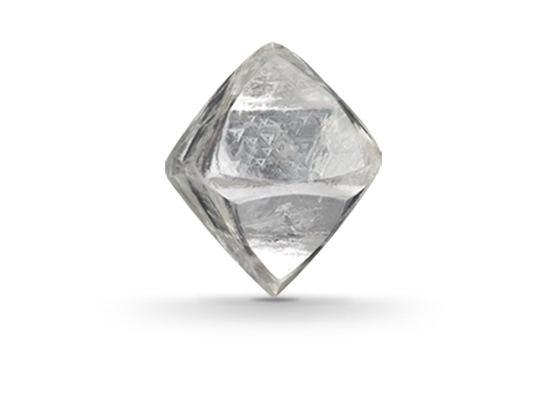
Geological origin and journey to the jewel
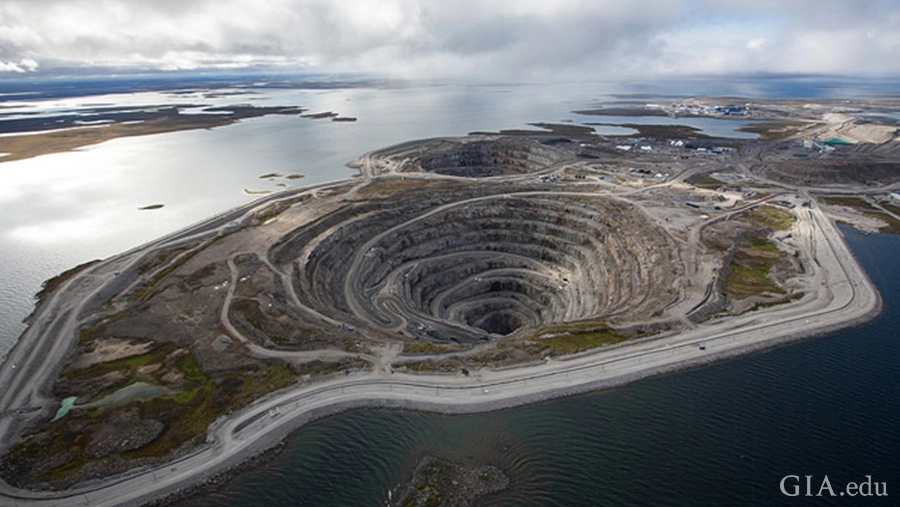
The diamond is formed under conditions of extremely high pressure and temperature, at depths of around 100 miles below the Earth's surface. From there it makes its way upwards through violent geological processes, before being mined, sorted, cut and polished.
The attached text and the GIA page emphasise an important point: the journey from rough stone to jewel is long and complex. Before reaching a window display or an atelier, a stone goes through extraction, trade, cutting, evaluation, potential certification and mounting. When purchasing a significant diamond, this supply chain should not be reduced solely to its carat weight.
April, engagement and anniversaries
The diamond is recognised as the birthstone for April and is the gemstone that marks the 60th and 75th wedding anniversaries. It is therefore a gemstone naturally linked to significant occasions: promise, continuity, memory, and family heritage.
In the context of a Bespoke Engagement Ring, the diamond remains a classic choice because it combines high hardness, brilliance and symbolic recognisability. However, tradition must not become automatic: even the diamond should be chosen according to the person, the setting and the intended daily use.
Diamond colour: why “colourless” doesn't always mean best for everyone
Within the normal colour range, diamonds are graded according to the D–Z scale: the closer a stone is to colourless, the higher it ranks on the scale. The differences can be subtle, but they have a major impact on valuation. At the same time, when actually choosing, one must consider the setting, metal and size of the stone.
A perfectly colourless diamond may be desirable, but it is not always the only sensible choice. In yellow or rose gold, for example, slight tints can be less noticeable than in a white metal setting. The evaluation must not be abstract: the diamond should be viewed within the context of the piece of jewellery.
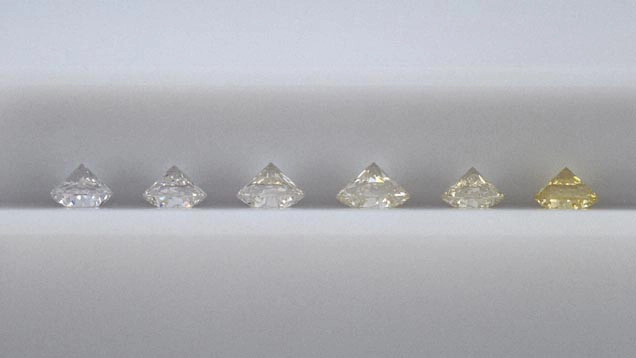
Coloured diamonds also exist, which follow specific grading logics and should not be classified on the D-Z scale. Natural colour, colour origin, any treatments and documentation are aspects that must be checked with particular care.
Gemmological technical data of the diamond
| Property | Technical specification |
|---|---|
| Mineral | Diamond |
| Chemical composition | C |
| Reference colour in technical data | Colourless |
| Refractive index | 2,42 |
| Birefringence | absent |
| Specific gravity | 3.52 ± 0.01 |
| Mohs hardness | 10 |
The 4Cs of the diamond: the technical language of quality
The 4Cs are colour, clarity, cut and carat weight: the global language of diamond quality. They are not intended to make the choice cold, but to compare different stones using a common method.
The value of a diamond comes from the combination of these factors, not just one. A higher carat weight may seem alluring, but if the cut is weak or the clarity penalises the transparency, the result on the finger can be less elegant than a smaller, better-proportioned stone. I have created an article dedicated to’detailed insight on this page.
Colour
In the D-Z range, diamonds closest to colourless are rarer. The difference between two grades can be hard for an untrained eye to discern, but it can significantly impact the price. In the studio, I always compare the colour against the chosen metal and in natural light, not just with the comparison specification sheet.
Purity
Clarity measures the relative absence of inclusions and surface characteristics. GIA assesses characteristics under 10x magnification, considering size, number, position, nature and relief. A small side inclusion can be less relevant than a prominent inclusion under the table.
Cut
The cut is not merely the shape. In a cut diamond, proportions, symmetry and polish determine the way light enters, is reflected and returns to the eye. It is here that human craftsmanship has the most direct impact on the stone's beauty.
Carat weight
The carat measures weight, not absolute visual size. Two diamonds of the same weight can look different if they have different proportions. Furthermore, the price does not increase linearly: larger, high-quality stones are rarer, so they can have a higher cost per carat.
Cut, brilliance, fire and scintillation
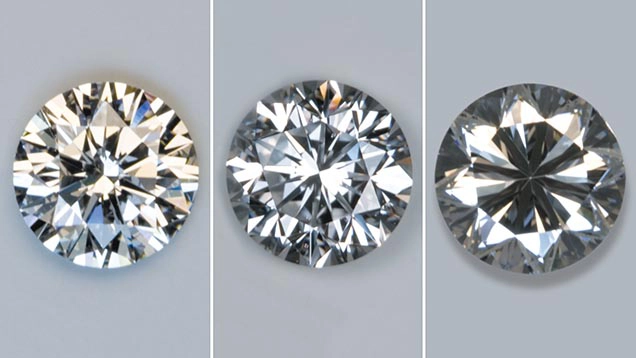
GIA distinguishes three fundamental optical effects: brilliance, fire and scintillation. Brilliance relates to reflected white light; fire is the flashes of colour; scintillation is the play of light and dark when the stone or the observer moves.
A common mistake is to think that more facets automatically mean more brilliance. Brilliance depends above all on proportions, polish and symmetry. For this reason, I look at the diamond in motion: a gemstone must live, not just look correct on paper.
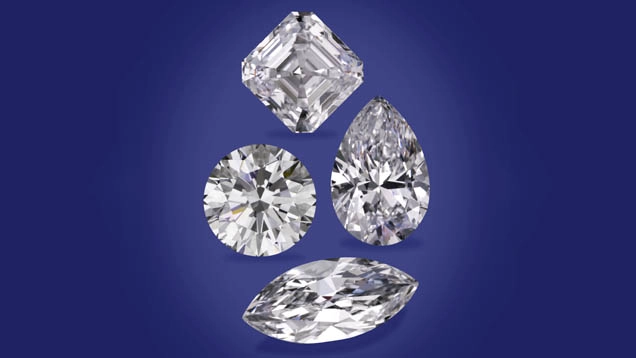
Diamond shapes: round, pear, marquise, oval, emerald
Shape communicates style. The round brilliant is the great classic; the pear cut elongates; the marquise is dramatic; the oval can make the hand look more slender; the emerald cut, with its open, geometric lines, demands a great deal of attention to clarity and transparency.
In a project of Personalised jewellery, shape is not chosen just for taste. It is chosen in relation to the setting, the wearability, the light and the personality of the person who will wear the jewel.
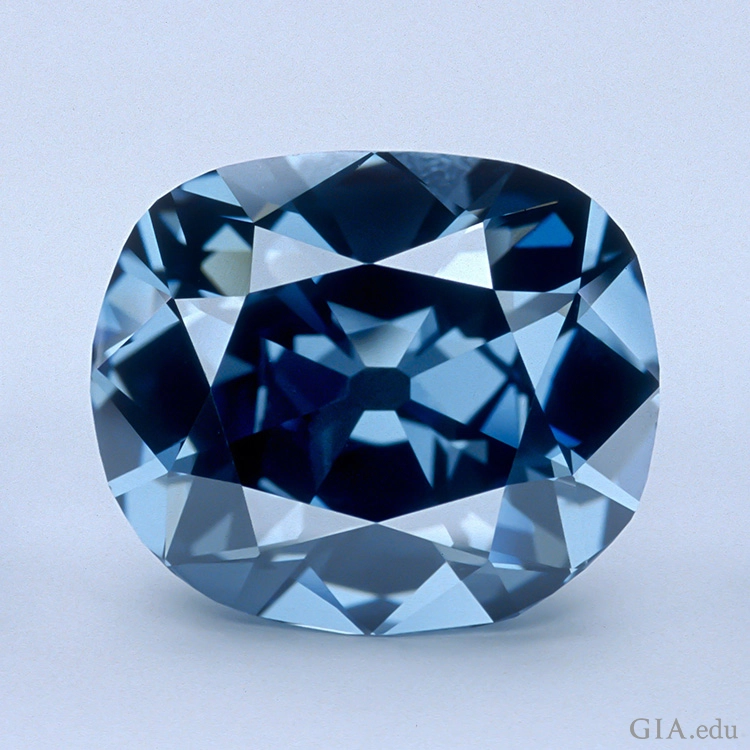 The Hope Diamond. Image courtesy of Chip Clark/Smithsonian Institution.
The Hope Diamond is probably the most famous coloured diamond in the world. A team of GIA gemmologists evaluated it in 1988. Having had the opportunity to weigh the loose diamond, they immediately made a remarkable discovery: the diamond weighed 45.52 carats, and not 44.50 carats, as had previously been recorded. GIA evaluators also reported that the Hope Diamond has a cushion brilliant cut. The colour was graded as a natural fancy deep greyish-blue diamond.
Buying advice: what to ask before choosing
For an important diamond, documentation is not a detail. It is essential to request a grading report: quality differences can be so subtle that they cannot be reliably recognised without laboratory verification.
Also ask whether the diamond is natural or lab-grown, if there are any colour or clarity treatments, what setting is planned and what maintenance will be required. In my journey of Method and Guarantees, the choice of the gemstone is always linked to the documentation, the actual use and the goldsmith's project.
Treatments, lab-grown diamonds and simulations
There are processes used to modify the colour, apparent clarity or durability of gemstones. In the case of the diamond, colour and clarity treatments can be sensitive to heat and chemicals: for this reason they must be disclosed and taken into account also during repair or maintenance.
There are also laboratory-grown diamonds, with chemical, physical and optical properties essentially similar to the natural diamond, but with a different origin. The main processes indicated in GIA reports for lab-grown diamonds are CVD and HPHT, with any post-growth treatments indicated where applicable. Imitations, on the other hand, are different materials chosen to look like diamond: they must not be confused with either natural or laboratory-grown diamonds.
Care and maintenance of the diamond
The diamond has a Mohs hardness of 10, but a diamond jewellery item is not indestructible. Sudden and extreme temperature changes can threaten the stone's stability, and heat and chemicals can affect treated diamonds. For daily cleaning, lukewarm water, mild soap and a soft toothbrush are a safe choice. For rings worn frequently, periodic checks of the prongs or setting are advisable: many stones are lost not because of the gem itself, but due to wear, knocks or mountings that are no longer in perfect condition.
Diamond in bespoke jewellery
The diamond is extraordinary when it is not treated like a formula. It can be the centre of a ring, a detail in a pendant, a hidden memory in a wedding band, a side light accompanying a coloured gemstone. Its strength lies in its precision, but also in its ability to become personal.
For a promise or an anniversary, it can dialogue with the wedding journey, with the Bespoke wedding rings or with a piece of jewellery conceived as a family narrative. In these cases, the narrative jewellery they help prevent a diamond from being reduced to a price or a carat weight.
Common Errors to Avoid
Choose only the carat
The carat is important, but it doesn't tell the whole story of the stone. A smaller diamond, well-cut and proportioned, can appear brighter and more harmonious than a larger one that is less balanced.
Confusing the shape with the cut quality
Round, oval, pear or emerald indicate the shape. Cut quality relates to proportions, symmetry, polish and light performance. These are two different aspects and both should be considered.
Neglecting certification and traceability
For an important diamond, a commercial certificate does not replace a gemmological report. Documentation helps verify quality, identity, and price consistency.
Ignore treatments or laboratory-grown origin
Natural, lab-grown, treated or imitation are not interchangeable categories. Before purchasing, you need to clarify what you are buying and with what documentation.
To think that toughness means invulnerability
A hardness of 10 offers high protection against scratches, but it does not eliminate risks related to impacts, worn settings, critical inclusions or thermal shock. The piece of jewellery still needs to be cared for.
Diamond FAQ
Is the diamond really the hardest gemstone?
Yes, on the Mohs scale diamond has a hardness of 10. This means very high resistance to scratching, not absolute invulnerability to impacts, extreme heat or setting issues.
What are the 4Cs of a diamond?
The 4Cs are colour, clarity, cut and carat weight. Used together, they make it possible to describe and compare the quality of a cut diamond.
Is a D colour diamond always the best choice?
It's a top-quality choice in the colourless range, but it's not always the most balanced for every budget or setting. The best choice depends on the project, the metal and the client's priorities.
Is a lab-grown diamond an imitation?
No. A laboratory-grown diamond is not an imitation: it has essentially identical properties to a natural diamond, but a different origin. An imitation, on the other hand, is a different material used to look like a diamond.
Is a certificate still required?
For important stones, yes: a gemmological report helps to identify quality, characteristics and stated origin. For small decorative diamonds, the level of documentation can be assessed on a case-by-case basis.
How do you clean a diamond ring?
Warm water, mild soap and a soft toothbrush are a safe solution. It is advisable to have claws and settings periodically checked by a jeweller.
Do you want to choose a diamond methodically?
An important diamond deserves guided choice: not just the biggest stone, not just the highest grade, but the right one for the piece of jewellery and for the person. Comparison serves to bring order to desire, budget, documentation and technical feasibility.
Can you continue comparing gemstones and meanings in’Gemstone Encyclopaedia, or bring your project to the studio for a confidential evaluation.
The initial meeting serves to clarify direction, timing, and feasibility. It does not require an immediate decision.
The GIA assumes no responsibility for the content of this article, as the Italian translations have not been checked by the GIA. I am not a GIA associate and the original reference content comes from the site www.gia.edu.