
In this article I explain to you how to clean white gold jewellery and how to look after them without risking ruining them.
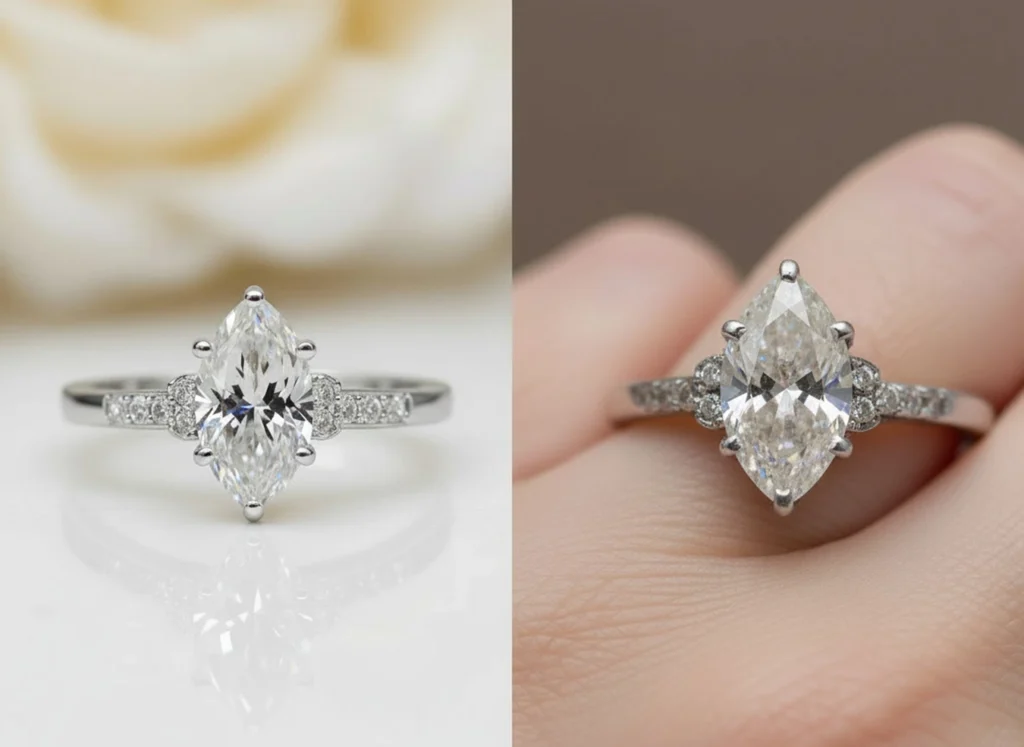
Before beginning, however, it is important to clarify one thing: home cleaning can help with routine maintenance, but it is not always enough. In many cases, especially when the piece of jewellery features stones, delicate settings, scratches or a loss of brilliance, it is advisable to consult a professional.
What is white gold
Many people talk about white gold, but it is not always clear what it is.
White gold is an alloy produced by combining pure gold with other metals that alter its colour and mechanical properties. In 18-carat gold jewellery, the alloy normally contains 75% of gold and the remaining 25% of other metals, which may include palladium, silver, copper, zinc or other elements depending on the specific composition used.
The white colour of white gold is not always perfectly neutral. For this reason, many pieces of jewellery undergo rhodium plating, a rhodium surface treatment that provides greater brilliance, a more luminous white and a more uniform finish.
Over time, however, the rhodium plating can wear away, especially in the areas most exposed to daily wear and tear.
How to clean white gold jewellery at home
For the routine cleaning of white gold jewellery, the main rule is simple: use gentle products and avoid aggressive or abrasive substances.
Here is a prudent method:
- Prepare some lukewarm water and mild soap. Avoid very hot water, bleach, concentrated ammonia, limescale removers or aggressive detergents.
- Submerge the piece of jewellery for a few minutes. This helps to soften residue from cream, soap, dust or daily grime.
- Use a very soft toothbrush. Gently sweep it over the less accessible areas, without applying excessive pressure, especially near the settings.
- Rinse carefully. Use clean water and take care not to work over an open drain.
- Dry with a soft cloth. Pat the piece of jewellery with a clean cloth, preferably non-abrasive. Avoid rough paper or fabrics that might scratch.
Bicarbonate of soda is often recommended in home remedies, but on rhodium-plated white gold jewellery it is best to use it with great caution or avoid it, as it can be abrasive if rubbed on the surface.
Specific products for cleaning white gold
Commercial products specifically for cleaning jewellery are available. Some kits include cleaning liquid, a basket and a small brush.
Before using them, however, it is important to read the manufacturer's instructions carefully and check that they are suitable not only for white gold, but also for any stones present in the jewellery.
A white gold and diamond ring does not require the same care as a piece of jewellery with an opal, pearl, turquoise, coral or other delicate gemstones. Some materials must not be immersed in liquids or treated with standard products.
Beware of the rhodium plating
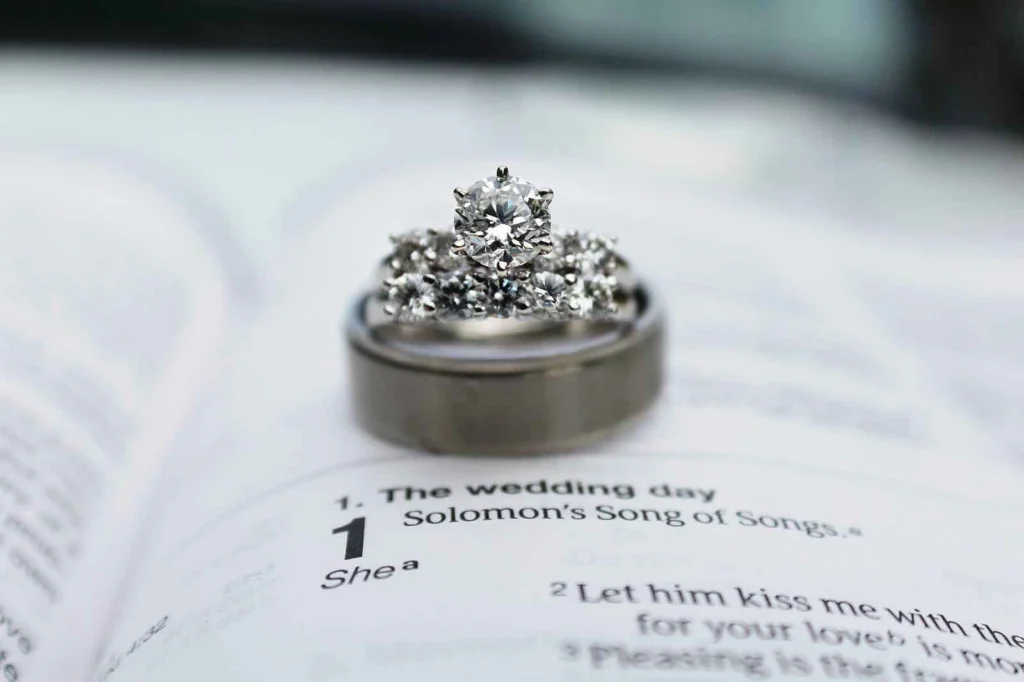
Many white gold pieces of jewellery are coated with a layer of rhodium. This finish makes the jewellery shinier and whiter, but it is not permanent.
Over time, daily wear and tear, contact with hard surfaces, perfumes, creams, detergents and sweat can wear away the rhodium plating. When this happens, the natural colour of the underlying metal may emerge, which is often slightly warmer or tends towards yellow.
In these cases, home cleaning is not enough. The intervention of a goldsmith is needed, who can assess the condition of the piece of jewellery and, if necessary, proceed with a new rhodium plating.
When to consult a goldsmith
There are situations where it is better to avoid DIY and ask for a professional assessment.
- The piece of jewellery has lost its sparkle despite being cleaned.
- The surface appears yellowish or the rhodium plating looks worn.
- There are set stones and you don't know if they are secure.
- The piece of jewellery has deep scratches or deformations.
- There are stubborn residues near the settings or internal parts.
A professional can check not only the external appearance, but also the security of the settings, the condition of the solder joints, the presence of wear, and the need for polishing or rhodium plating.
Why maintenance is important
La jewellery care it is essential for protecting an asset that may have economic value, but above all sentimental value.
An engagement ring, a wedding ring, a solitaire or a piece of jewellery received at an important moment are not simple objects. They are traces of a personal story.
Looking after it means preserving its beauty, but also respecting the meaning that that piece of jewellery carries with it.
Those who wish to learn more about the maintenance of other metals can read the article dedicated to how to clean platinum jewellery.
For a professional check, you can look further into the page dedicated to Guarantees or book an appointment to assess the condition of your piece of jewellery.
The first meeting is intended to clarify the direction, timetable and feasibility. It does not require an immediate decision.