
In this second part of the journey dedicated to history of jewellery, let's start again from the Roman period and go right through to the Middle Ages.
It is a long and fascinating passage, in which the jewel is not merely an ornament, but becomes a sign of power, devotion, belonging, technical skill and cultural transformation.
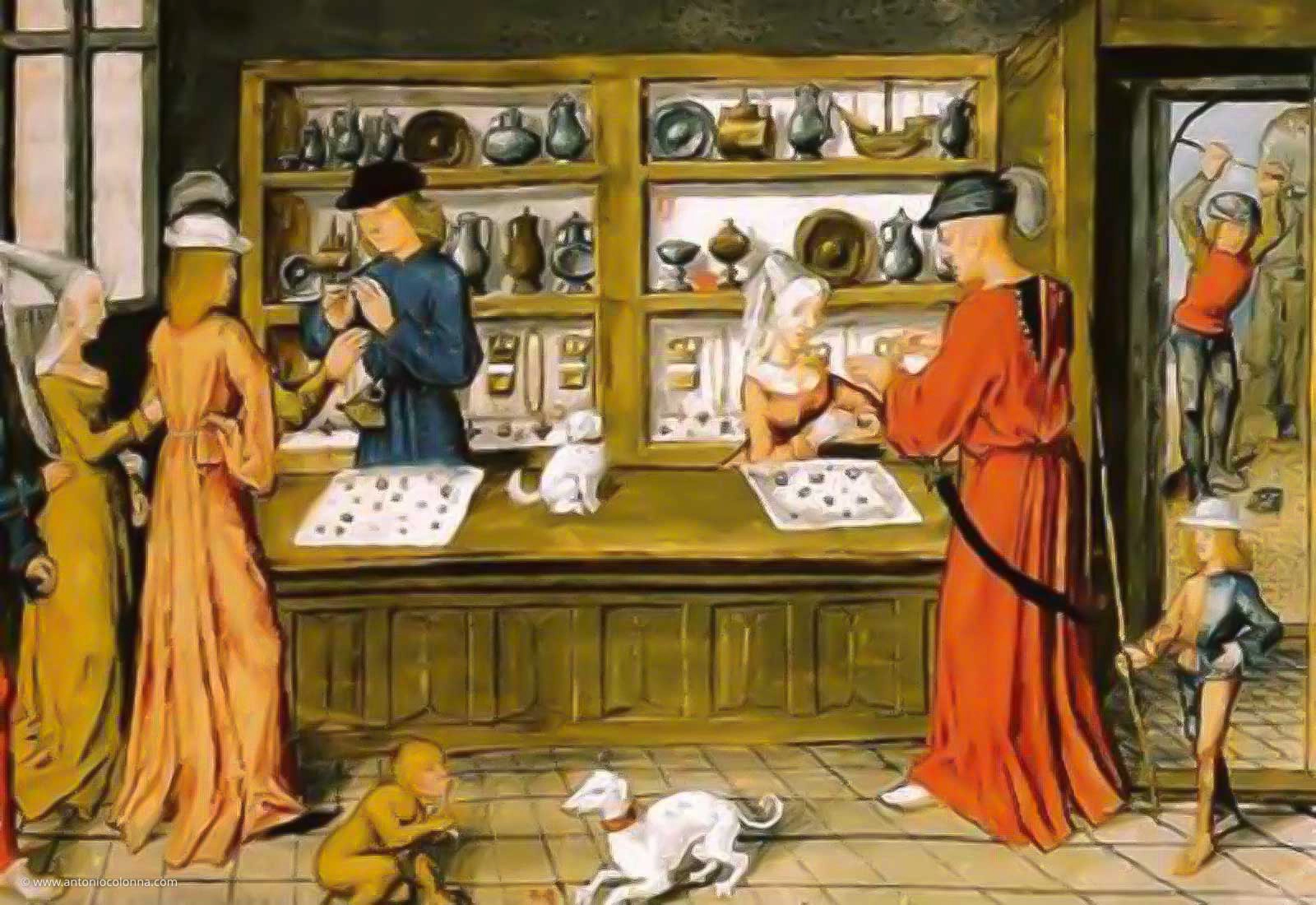
The history of jewellery after the Roman era
During the Roman imperial age, the art of goldsmithing asserted itself with increasingly rich workmanship. We are not just talking about rings, necklaces, or bracelets, but also fabrics inlaid with gold threads, shoes decorated with golden fringes, and jewel-anklets.
In the third century AD it was not uncommon to find precious items containing coins, transformed into ornamental and symbolic elements. During this same period, a technique of great refinement was becoming increasingly popular: the’opus interrasile.
What is opus interrasile
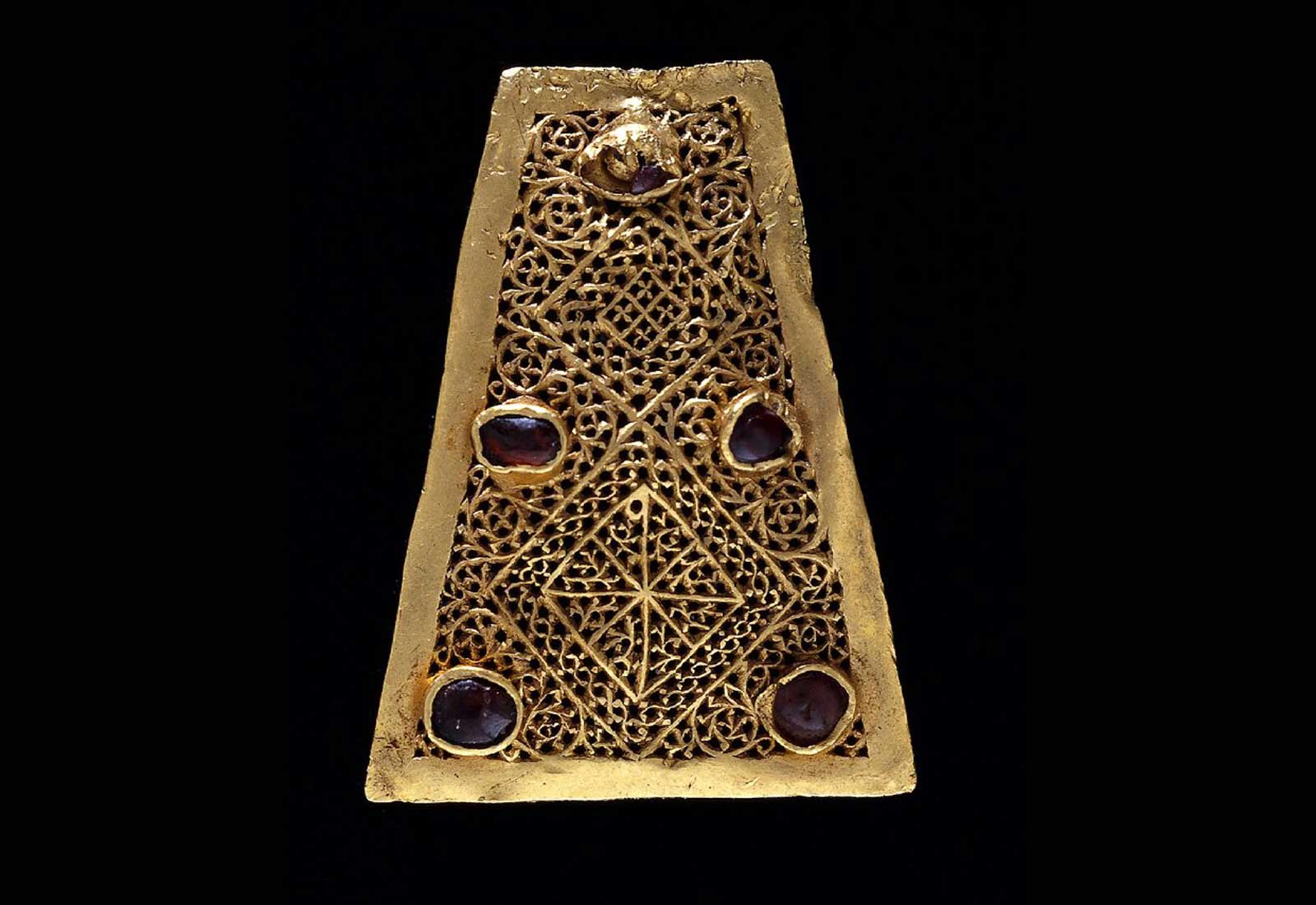
Theopus interrasile it is a technique through which gold leaf is worked in openwork, until a light and refined effect is obtained, similar to lace.
It is workmanship that bears witness to the technical evolution of ancient goldsmithing and the ability of artisans to transform precious metal into complex surfaces, rich in solids and voids.
During that period, many figures were portrayed with elaborate jewellery, a sign not only of wealth, but also of social status and cultural belonging.
It is interesting to note how certain fashions of the era have cyclically returned throughout history. The long necklaces wound several times around the body, falling as low as the hips, are in fact reminiscent of styles that were later revived in the twentieth century, particularly in the 1920s.
The barbarian period
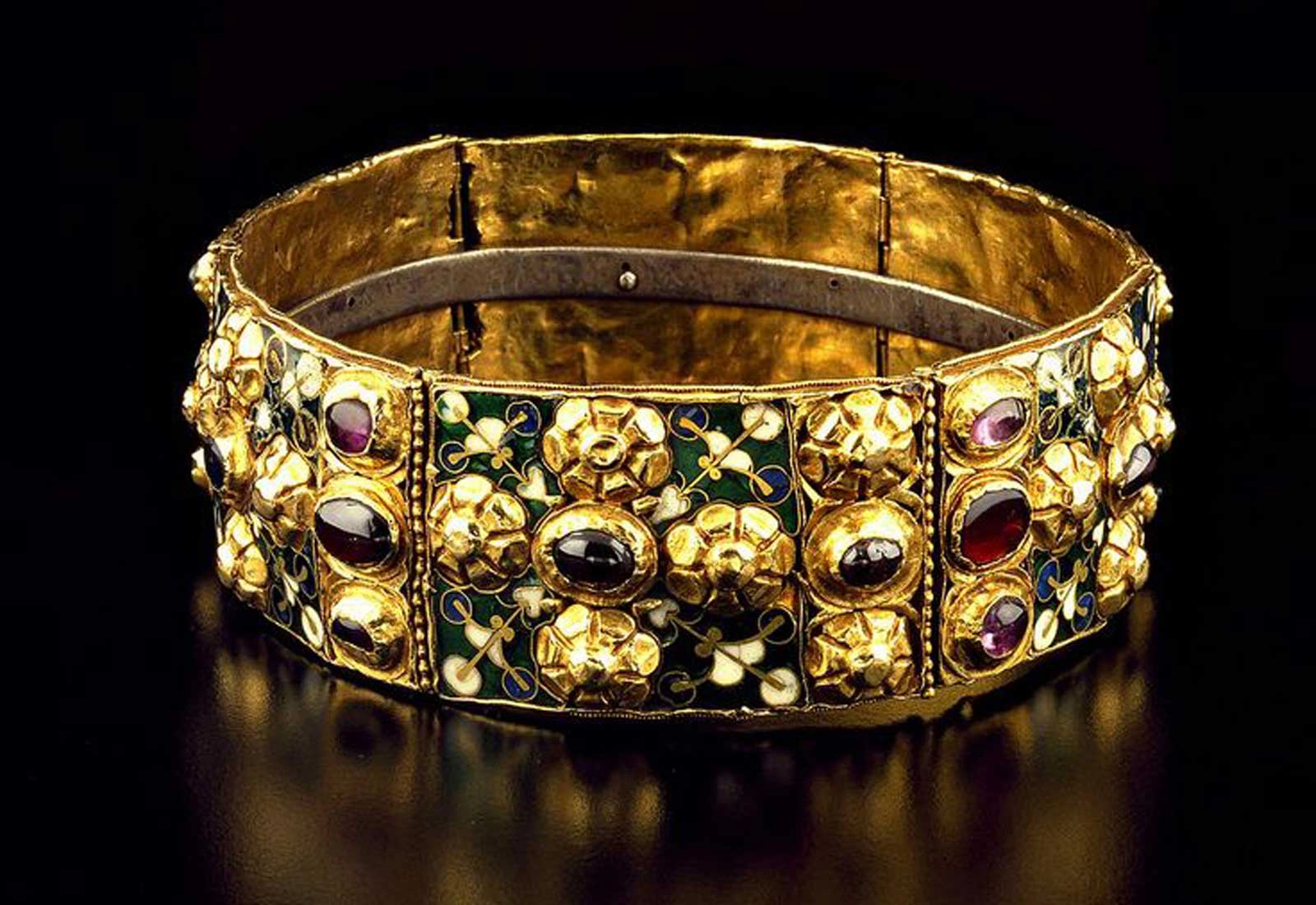
During the barbarian period, goldsmithing made a major expressive leap. The surface gave way to the power of the line, at the crossroads of barbarian art, classical tradition, and Byzantine influence.
Testifying to the renewed vigour of the goldsmith's art are numerous finds: brooches, diadems, crosses, decorative elements and precious objects recovered from Lombard necropolises and major centres of early medieval Italy.
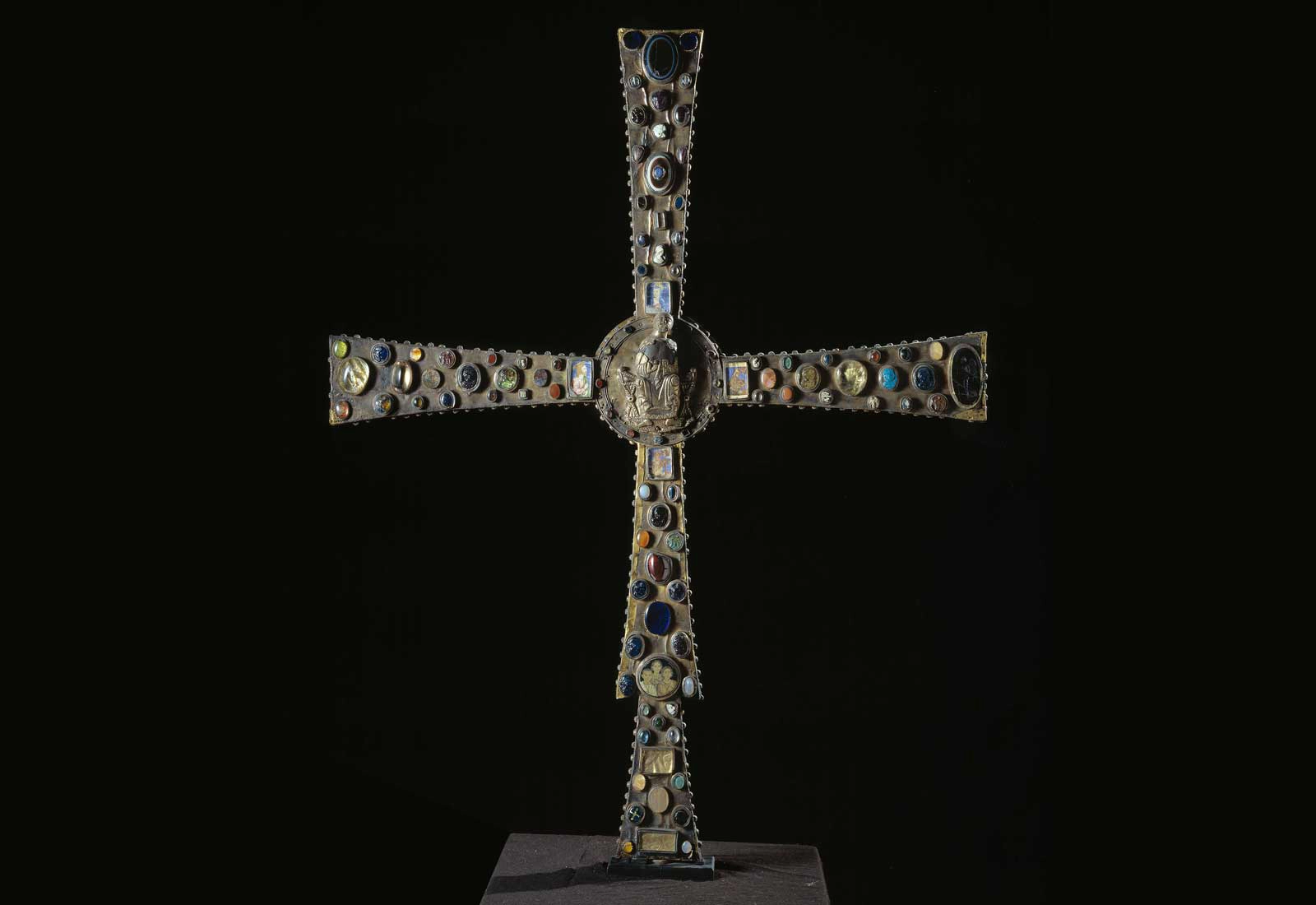
The style is often polychrome, with widespread use of polished stones set in gold. Goths, Lombards and Franks used techniques and ornamental solutions capable of blending different traditions.
Among the best-known works of this period, we can mention:
- the Iron Crown, kept in the Chapel of Theodelinda in Monza Cathedral;
- the Cross of Desiderius, linked to the Lombard tradition and preserved in Brescia;
- the Triumph of King Agilulf, an important testimony of Lombard art.
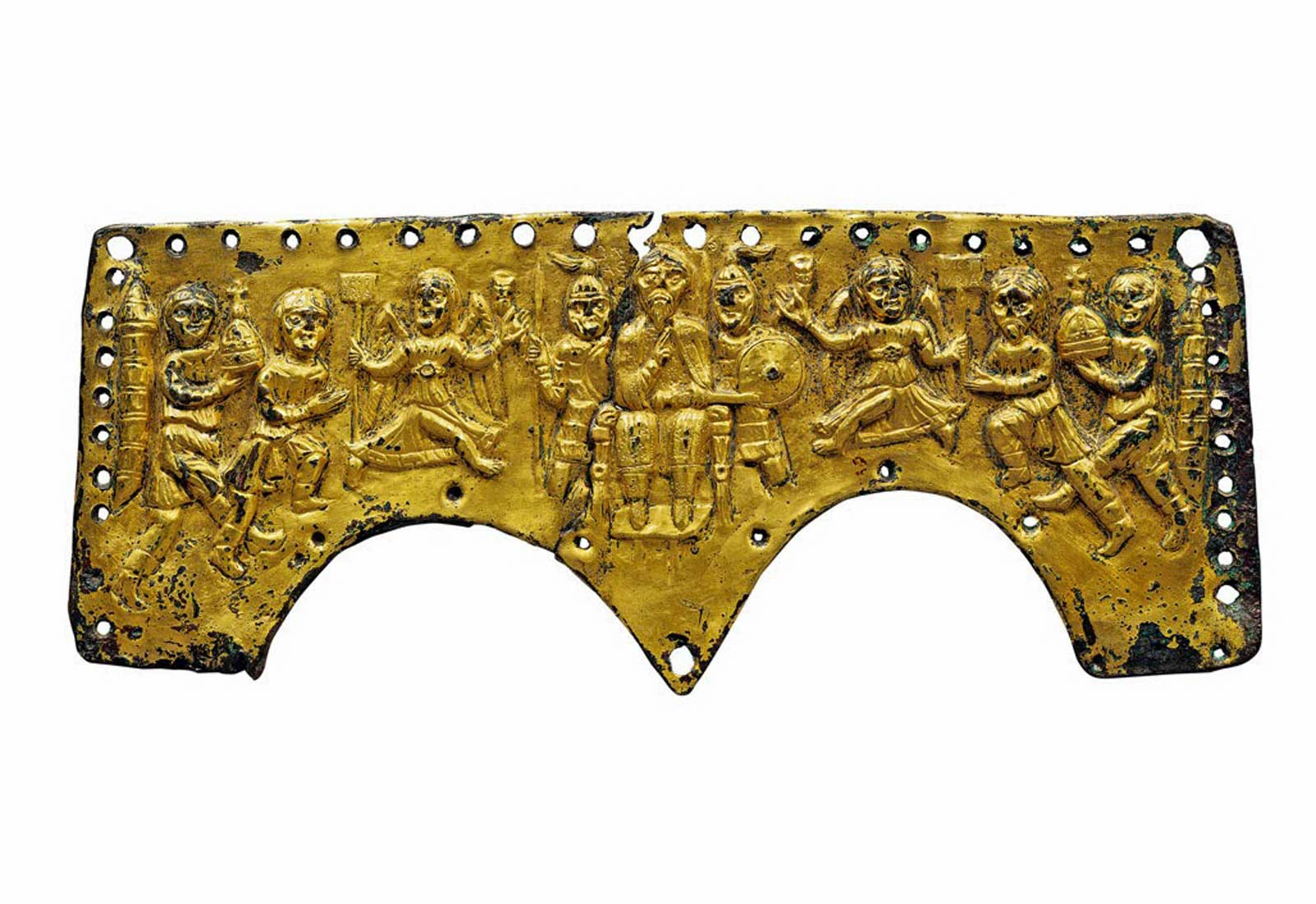
Later, the animal style also spread across Europe, coming mainly from Scandinavian areas and the North Sea. Decorations featuring stylised animals were frequent on weapons, armour and objects associated with the warrior elite.
The jewel in the Middle Ages
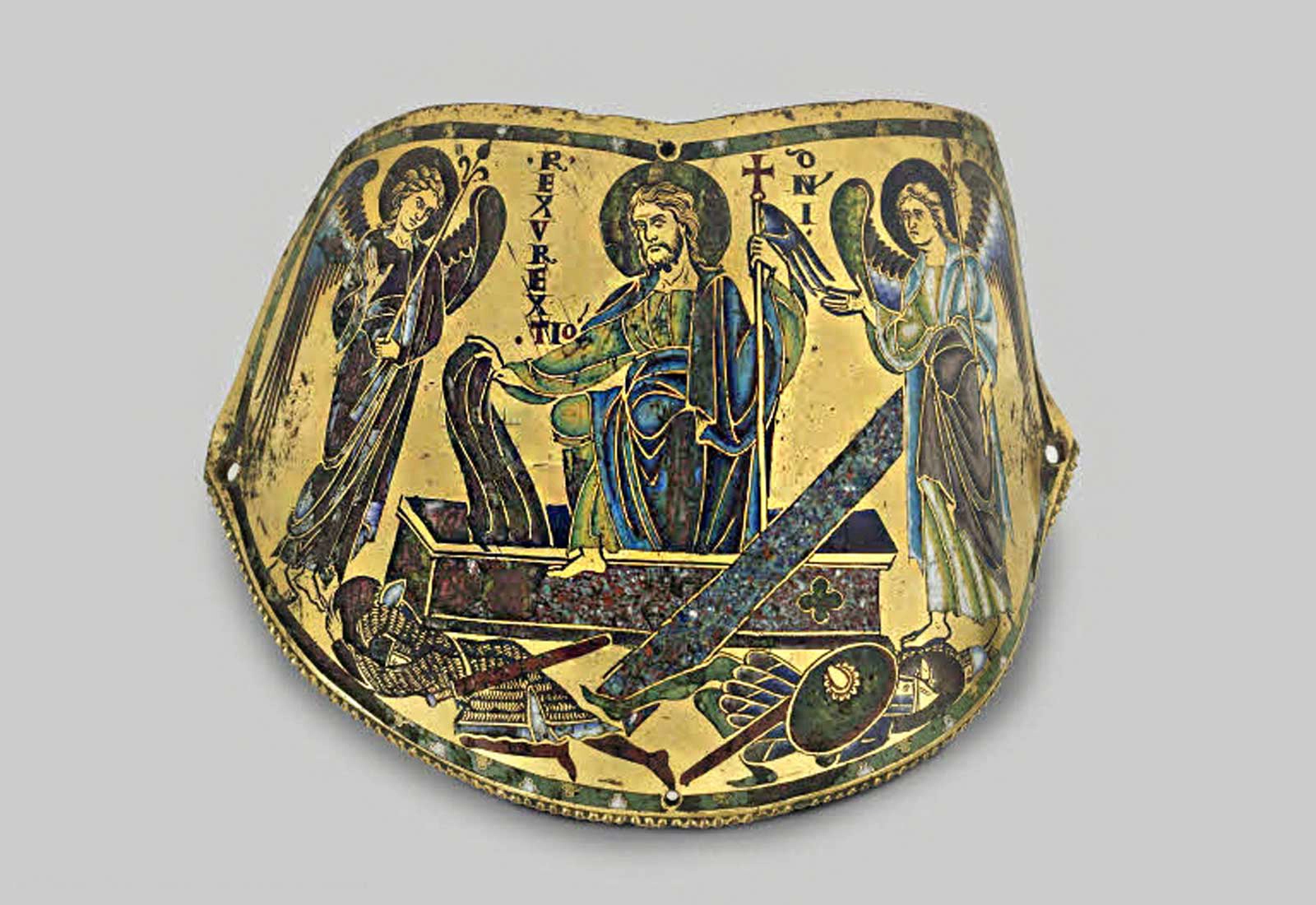
In the Middle Ages, precious religious items were of great importance. Rosaries with precious beads, medallions, reliquaries and devotional objects became symbols of faith, prestige and wealth.
The medieval jewel was not merely decoration. It could represent protection, devotion, power, belonging to a social class or a bond with the sacred.
In the thirteenth century, according to tradition, Louis IX of France restricted the use of diamonds, reserving them for the Virgin Mary. This illustrates well how much the jewel, in the medieval era, was laden with moral, religious and social meanings.
Settings and enamels
During the Middle Ages, new setting and enamelling techniques were also developed and perfected.
Enamel was of particular importance champlevé e cloisonné. In the first case, the metal is carved to receive the enamel; in the second, thin metal walls create small housings that hold the different colours.
These techniques made it possible to enrich surfaces, religious symbols, crosses, medallions and precious objects with chromatic effects of great visual strength.
Towards the Renaissance
With the Middle Ages we approach the eve of a great transformation: the Renaissance.
The goldsmith's workshop will increasingly become a place of technical, artistic, and cultural research. The jewel will begin to converse with painting, sculpture, architecture, and the new way of looking at man and the world.
The story of the jewel thus continues its journey: from a symbolic and ritual object to a work capable of uniting technique, beauty, power and narrative.
Those who wish to explore the relationship between technique, meaning and design in more depth can visit the section dedicated to Bespoke personalised jewellery or the one dedicated to narrative jewellery.
The first meeting is intended to clarify the direction, timetable and feasibility. It does not require an immediate decision.
Photographic sources indicated in the old article: vanillamagazine.it, lamanodileonardo.blogspot.com, turismobrescia.it, britishmuseum.org, Martine Beck Coppola.
“`