
I exclusive jewellery they are increasingly desired. Many people look for a unique, personal piece of jewellery, different from what is seen in shop windows or catalogues. But not everything that is called “customised” is truly exclusive.
Personalisation shouldn't mean adding a letter, a name or a small detail to a mass-produced item. An exclusive piece of jewellery comes from a different process: it starts with a story, an idea, genuine listening and a design built around the person who will wear it.
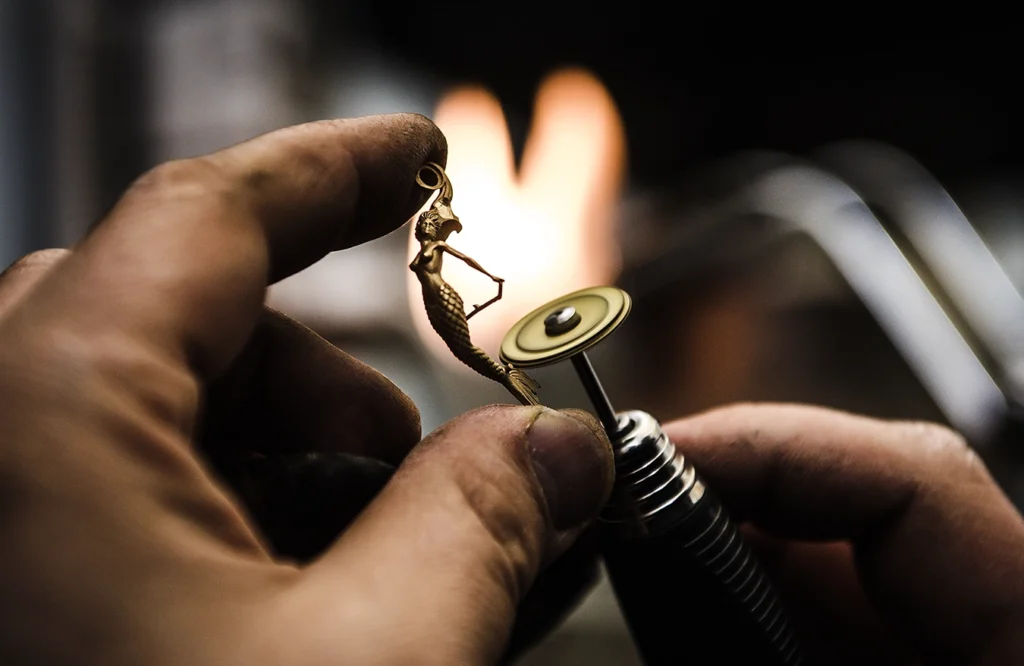
Personalised jewellery and the desire for uniqueness
The desire for uniqueness is deeply human. Each of us wants to feel recognised for who we are, for our journey, for our tastes, and for our experiences.
This need is also reflected in the way we choose what we wear. An outfit, an accessory, a perfume or a piece of jewellery can become ways to tell something about ourselves.
In the film Dead Poets Society, Professor Keating invites his students to find their own voice, not to content themselves with always walking the best-trodden path. It is an image that also fits well with the theme of exclusive jewellery.
A truly personal piece of jewellery should not conform. It should distinguish, without showing off. It should add an accent to the wearer's story.
Personalisation or simple replica?
In recent years, many brands have built entire strategies around the word “personalisation”. Engraved name, initial, star sign, colour chosen by the customer, small symbol added to a standard product.
These elements can make an object feel closer to the person buying it, but they don't always make it truly unique.
A t-shirt with a printed name remains a mass-produced t-shirt. An industrial bracelet with a charm chosen from many remains part of a replicable system. A ring modified in one detail does not automatically become an exclusive piece of jewellery.
The real question is: does that piece of jewellery truly come from you, from your story, from your person, or does it come from a design already decided by others?
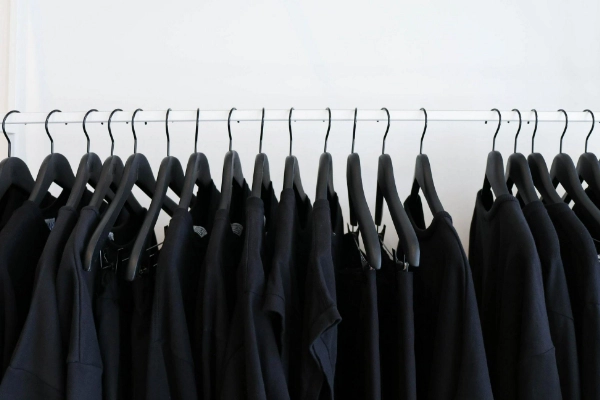
The limit of mass-customised products
The market often offers items that look tailored, but which in reality remain industrial products.
The difference is substantial.
In mass customisation, the starting idea belongs to the brand. The customer intervenes by choosing from pre-arranged options: a letter, a stone, a symbol, a size, a combination.
With bespoke jewellery, on the other hand, the initial idea originates from the client, from their story, their desire or the meaning they want to hold onto. The goldsmith does not apply a variation to a model: they build a design.
This is where personalisation stops being decoration and becomes creation.
Exclusive jewellery: the value of craftsmanship
A exclusive piece of jewellery it carries with it the mark of design and the human hand.
It is not just a matter of working with gold, platinum, diamonds or gemstones. It is about interpreting a story and transforming it into form, proportion, volume, finish, setting and detail.
True craftsmanship is not nostalgia for the past. It is expertise applied to a specific project. It is the ability to use technique, tools, experience and sensibility to create something that did not exist before.
When a piece of jewellery is born like this, it isn't a copy with a slight modification. It is an object designed for a specific person.
My method against fake personalisations
In my work I don't start from a catalogue to be adapted. I start from a conversation.
I ask the client what they want to tell, which moment they want to preserve, who will receive the piece of jewellery, and which symbols, shapes, colours or materials might make sense within that story.
From this listening the project is born: sketches, study of proportions, choice of materials, any 3D modelling, technical assessments, trials, modifications and final production.
The customer doesn't simply choose from ready-made options. They take part in the creative process.
This is the turning point: an exclusive piece of jewellery should not just look unique. It truly has to be.
Creativity makes all the difference
Creativity is what allows you to turn a story into a jewel.
It can start from a memory, a place, a phrase, a song, a birth, a promise, a landscape, a loved one or a family symbol.
Every life contains images, signs and passages that belong to no one else. The task of bespoke jewellery is to give form to that invisible material.
This is where exclusivity is born: not in strangeness for its own sake, but in the profound consistency between jewel and personal history.
Uniqueness and enduring value
An exclusive piece of jewellery may have economic value, but its most important value is often another: the ability to preserve memory.
A mass-produced piece of jewellery can be beautiful, elegant, and even precious. But it can hardly tell a personal story with the same force as a piece of jewellery born for that story.
When tomorrow is handed down, people will not simply say: “this was a ring”. They will be able to say: “this piece of jewellery was born to tell the story of that moment, that person, that promise”.
This is the difference between owning an object and keeping a story.
When to choose an exclusive piece of jewellery
An exclusive piece of jewellery is a suitable choice when the gift cannot be generic.
It can be an engagement ring, a wedding ring, a piece of jewellery for the birth of a child, an anniversary, a family occasion or a personal gift. In all these cases, the question shouldn't just be “what piece of jewellery shall I buy?”, but “what story do I want to tell?”.
Anyone wishing to explore this topic further can also read the dedicated article on why choose an exclusive, bespoke piece of jewellery.
To begin a personal creation journey, you can visit the dedicated page on Bespoke personalised jewellery or the one dedicated to narrative jewellery.
You can also visit the section Creations to see some examples of bespoke jewellery.
The first meeting is intended to clarify the direction, timetable and feasibility. It does not require an immediate decision.