
Valuing jewellery is a delicate matter.
A ring, a necklace, a gemstone or a family heirloom may have economic value, but also sentimental, historical and symbolic value. For this reason, the question “how much is it worth?” should never receive a superficial answer.
When it comes to estimate the value of the jewellery, it is necessary to distinguish between authenticity, materials, gemstones, condition, craftsmanship, documentation and context.
In this article I explain why looking at a piece of jewellery with the naked eye is not enough and why, in many cases, a serious valuation requires method, tools and expertise.
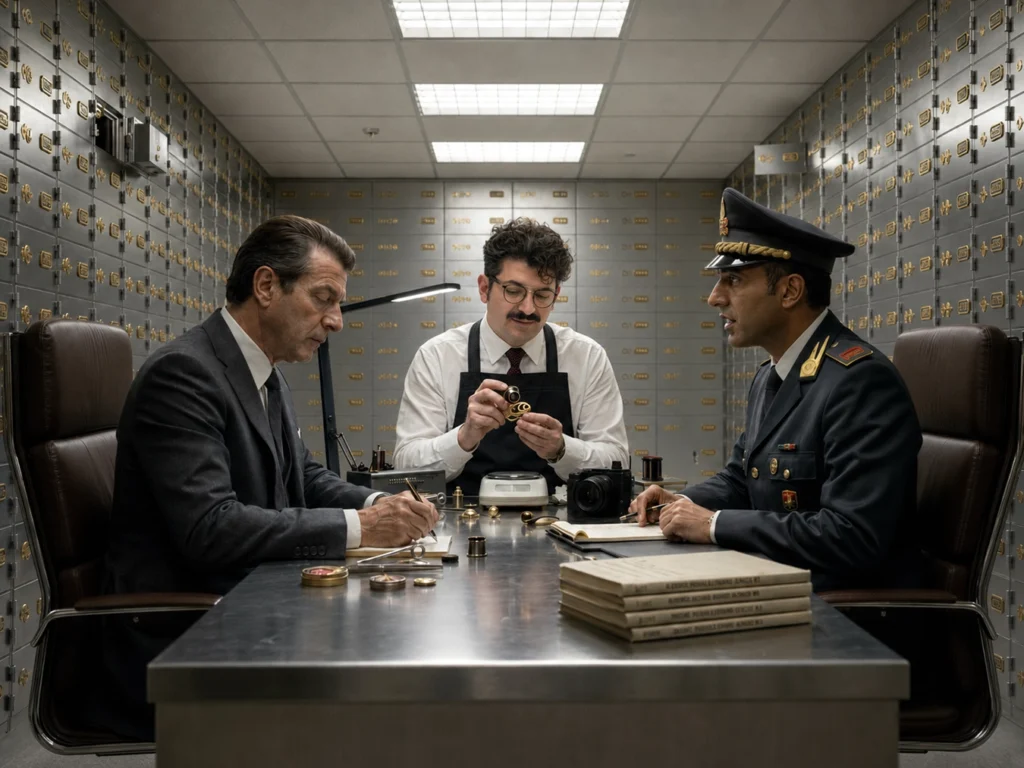
The dual value of a jewel
A piece of jewellery can have at least two levels of value.
The first is the material valuemetal, weight, hallmark, gemstones, quality, craftsmanship, market, rarity, state of conservation and potential for reuse or resale.
The second is the sentimental valuethe memory of a person, a promise, a birth, a marriage, an inheritance, a family transition.
An expert appraisal or evaluation cannot replace the emotional value of a piece of jewellery, but it can help to better understand its technical, commercial or insurance value.
This distinction is important because it avoids two opposite errors: overvaluing an object just because it is laden with memory, or undervaluing it because one does not know its materials, gemstones and craftsmanship.
How to tell if a piece of jewellery is real or fake
Working out whether a piece of jewellery is genuine is not always straightforward.
The human eye, even when trained, cannot completely replace instruments, tests and technical observation. Some counterfeits are obvious, whereas others are much more sophisticated.
The risk concerns both metals and gemstones.
A piece of jewellery may look like gold but not be. A stone may look natural but be synthetic, imitation or treated. A diamond can be confused with other gems or materials. A setting can hide details that are not immediately legible to the naked eye.
Because of this, when the economic or family value is significant, checking shouldn't rely solely on impressions.
Trust is important, but it is not enough
In the world of jewellery, trust plays a huge role.
One relies on the jeweller, the seller, the brand, the declared provenance, family memory or what has been passed down over time.
Trust is important, but it must not replace verification.
Even an item purchased from a seemingly secure channel should be accompanied by consistent documentation. Similarly, an inherited piece of jewellery may hold great sentimental value, but it still requires a technical inspection if one wants to know its true value.
The point isn't to distrust everything. The point is to prevent trust from becoming the sole evaluation criterion.
Evaluating a piece of jewellery: what the customer can observe
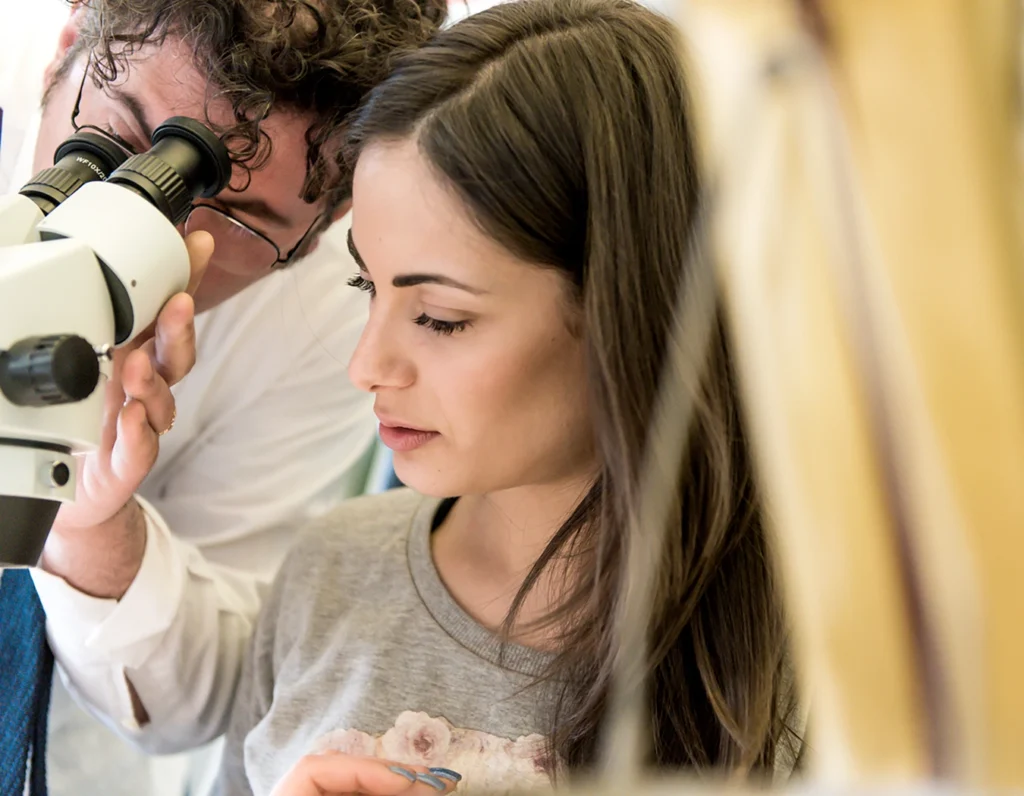
A customer can start with some preliminary checks, knowing however that they are not sufficient for a definitive assessment.
- presence of hallmarks or stamps on the metal;
- overall condition of the piece of jewellery;
- presence of chipped, loose or replaced stones;
- consistency between weight, dimensions and stated material;
- presence of receipts, certificates or purchase documents;
- any inscriptions, signatures, numbers or identifying marks;
- family history or known provenance.
These elements are useful, but they are not enough to establish authenticity and value with certainty.
A professional check can confirm, correct or disprove what appears at first glance.
Why checking with the naked eye can be deceiving
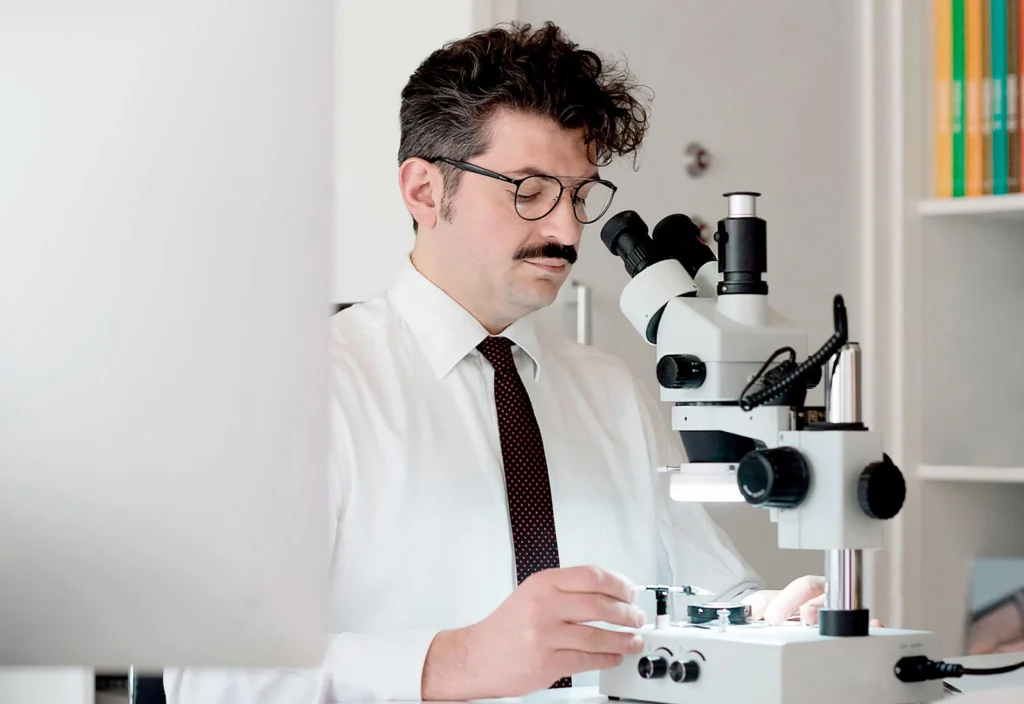
Many imitations are built precisely to look convincing.
Colour, lustre, weight, transparency and setting can be misleading. Some treatments artificially improve the appearance of a gemstone. Some stones can be confused with others. Some materials can mimic the visual effect of more precious gems.
The problem becomes even more delicate when the gemstone is already mounted.
The setting can limit observation, obscure important parts of the stone or make it difficult to assess certain technical aspects.
Because of this, the assessment must be prudent: when it is not possible to establish a fact with certainty, it is correct to state this.
The role of the expert witness
A gemstone expert examine the piece of jewellery using a systematic approach, tools and specific expertise.
The work is not about giving a quick opinion, but about gathering useful evidence: metal, gems, craftsmanship, condition, any treatments, documentation, correspondence between what is stated and what is observed.
A professional valuation can be useful in many cases:
- estate divisions;
- sale or purchase of jewellery;
- authenticity check;
- precious stone inspection;
- insurance claims;
- family asset documentation;
- disputes or the need for a technical opinion.
My professional background also includes working as an expert witness at the Chamber of Commerce and the Court of Bari, as well as being registered with the Italian Association of Experts in Rome.
Valuations for safety deposit boxes, probate and inheritances
A professional valuation can also be useful when jewellery emerges in delicate contexts, such as estates, inheritance divisions or the opening of safety deposit boxes.
In such cases, simply stating a generic value is not enough. It is important to describe the goods methodically, distinguishing metals, gemstones, condition, any existing documentation and the limitations of the analysis carried out.
When a safety deposit box is opened in the presence of those entitled to it or according to the established procedures, the jewellery contained within it may require an initial technical inspection: what is there, in what condition it is, which elements are identifiable and which ones instead require further checks.
The expert appraisal helps to bring order to a valuable estate, avoiding improvised valuations, family conflicts or decisions made without a clear technical basis.
In the case of inheritances or divisions between multiple parties, an accurate description can become essential to distinguish economic value from sentimental value and to document assets in a more transparent way.
Jewellery valuation: what a serious report should contain
Useful documentation should not be limited to a generic description.
Where necessary, it should include elements that make the piece of jewellery recognisable and the work carried out verifiable.
Depending on the type of evaluation, the following may be useful:
- photos of the jewellery;
- close-up photos, punch marks, engravings, or construction details;
- material description;
- description of the gemstones;
- weight and key measurements;
- condition;
- any remarks on treatments or imitations;
- indication of the limitations of the analysis, where present;
- estimated value, if required and technically possible.
Documentation is used to avoid ambiguity.
A piece of jewellery that is photographed, described and accurately identified is much better protected than an item without data.
Commercial documentation and expert report documentation
It is important to distinguish between commercial documentation and expert report documentation.
A receipt, a sales guarantee or a commercial invoice can be useful, but they do not always equate to a valuation.
Commercial documentation accompanies the purchase. Expert documentation, on the other hand, stems from a technical observation and must describe the piece of jewellery in a more specific way.
This distinction is fundamental when the jewellery has to be appraised for asset, insurance, inheritance or technical purposes.
When is a gemmological laboratory needed
There are situations where the expert’s opinion may not be sufficient or it may be advisable to resort to a specialised gemmological laboratory.
This can happen when more in-depth analyses of the origin, treatments, nature of the gemstone or specific characteristics are required.
In such cases, internationally recognised gemmological institutes may come into play.
Before eventually sending a gemstone or piece of jewellery, it is advisable to document the condition of the item at the time of dispatch with photographs and, where useful, video.
This makes it possible to compare the condition of the piece of jewellery before and after its return and to keep a technical record of the procedure.
How much does a gemological appraisal cost
There is no single answer.
The cost of a survey depends on many factors:
- type of jewel;
- number and type of gemstones;
- complexity of the analysis;
- need for photographs or videos;
- possible dispatch to an external laboratory;
- depth of the requested documentation;
- purpose of the evaluation.
A simple valuation does not carry the same weight as a detailed appraisal complete with photographic documentation, gemmological analysis and a technical report.
That is why it is always correct to clarify the purpose of the request first.
Market value and sentimental value
One of the most delicate steps concerns the difference between market value and sentimental value.
An inherited piece of jewellery may have a modest financial value, but an enormous family value.
Conversely, a financially significant piece of jewellery may not have any particular personal meaning.
The purpose of a technical appraisal is to bring order to the objective elements: materials, gemstones, condition, market, documentation.
Sentimental value, on the other hand, remains tied to the person, the family and history.
Both levels deserve respect, but they must not be confused.
How to prepare for an assessment
Before taking a piece of jewellery for valuation, it is a good idea to gather everything that might be useful.
- purchase receipts;
- gemological certificates;
- vendor's guarantees;
- historical photos of the jewel;
- any previous expert reports;
- provenance information;
- any repair or modification work;
- purpose of the evaluation.
The more information is available, the more precise the work can be.
The lack of documents does not prevent an assessment, but it may limit its depth.
Expertise and trust: the correct method
A client should leave an assessment with greater clarity, not new confusion.
For this reason I consider it important to explain what is being observed, which elements are certain, which are probable and which instead require further analysis.
The expert report is not just a final document. It is also a journey of understanding.
Whenever possible, I like to involve the client in the observation, showing the details and explaining why a certain element is relevant.
Trust is also born from this: not from the easy promise, but from the transparency of the method.
Valuing jewellery: when to seek an opinion
Seeking expert advice is advisable when:
- you have inherited jewellery and you don't know its value;
- you have to divide a family estate;
- you must open or take an inventory of the contents of a safety deposit box;
- you want to sell or buy an important piece of jewellery;
- you have doubts about the authenticity of a gemstone;
- you have received unclear documents;
- you must insure a piece of jewellery;
- you want to distinguish between material value and sentimental value;
- you need a more accurate technical description.
In all these cases, a professional assessment can avoid errors, misunderstandings and hasty decisions.
My approach to jewellery valuation
In my work I consider assessment to be an act of responsibility.
It is not just about stating the value of an item. It is about protecting the client from superficial valuations, unresolved doubts, incomplete documents or unrealistic expectations.
A piece of jewellery can contain metal, stones and craftsmanship, but it can also contain memory, affection and family identity.
Therefore, every analysis must be conducted with technical care and human respect.
You can find out more about my method on the dedicated page for Guarantees and on the page dedicated to working method.
To find out more about my professional profile, you can also visit the page About.
The first meeting is intended to clarify the direction, timetable and feasibility. It does not require an immediate decision.