
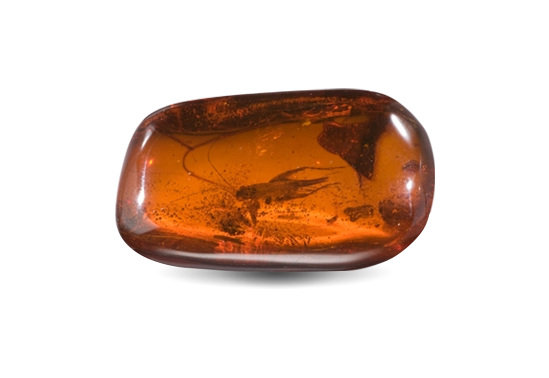
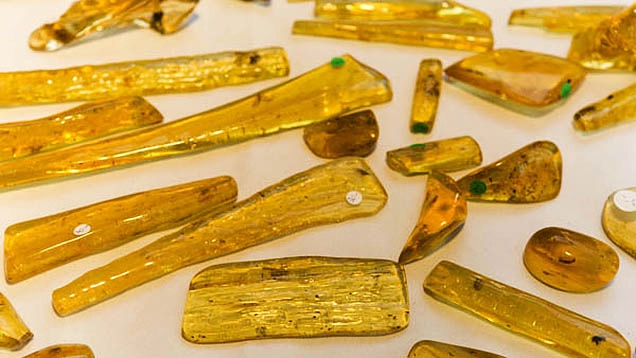
This large, elongated amber bead contains a virtually intact insect inclusion. The gemstone weighs 93.87 carats
Amber: guide to the organic, warm and lightweight gem
Amber is not chosen the way a hard stone is. It is an organic gem, born of fossilised plant resin, and it carries with it a quality that is rare in jewellery: it seems to hold light, time and memory. In my work I consider it a gem to be listened to carefully, better suited to a narrative piece of jewellery than to casual, everyday wear.
This guide has been created to help you understand what to look for before choosing amber: colour, transparency, inclusions, treatments, related materials such as copal, and above all, care. It is a fascinating gemstone, but soft; for this reason, it should be chosen with awareness, not just for its warm tone.
What is amber
Amber is an organic gemstone: it is not a mineral, but fossil resin. It formed when the sap or resin of ancient trees hardened and fossilised over very long geological timespans. This origin explains both its charm and some of its delicate qualities: lightness, visual warmth, softness and sensitivity to heat, light and chemicals.
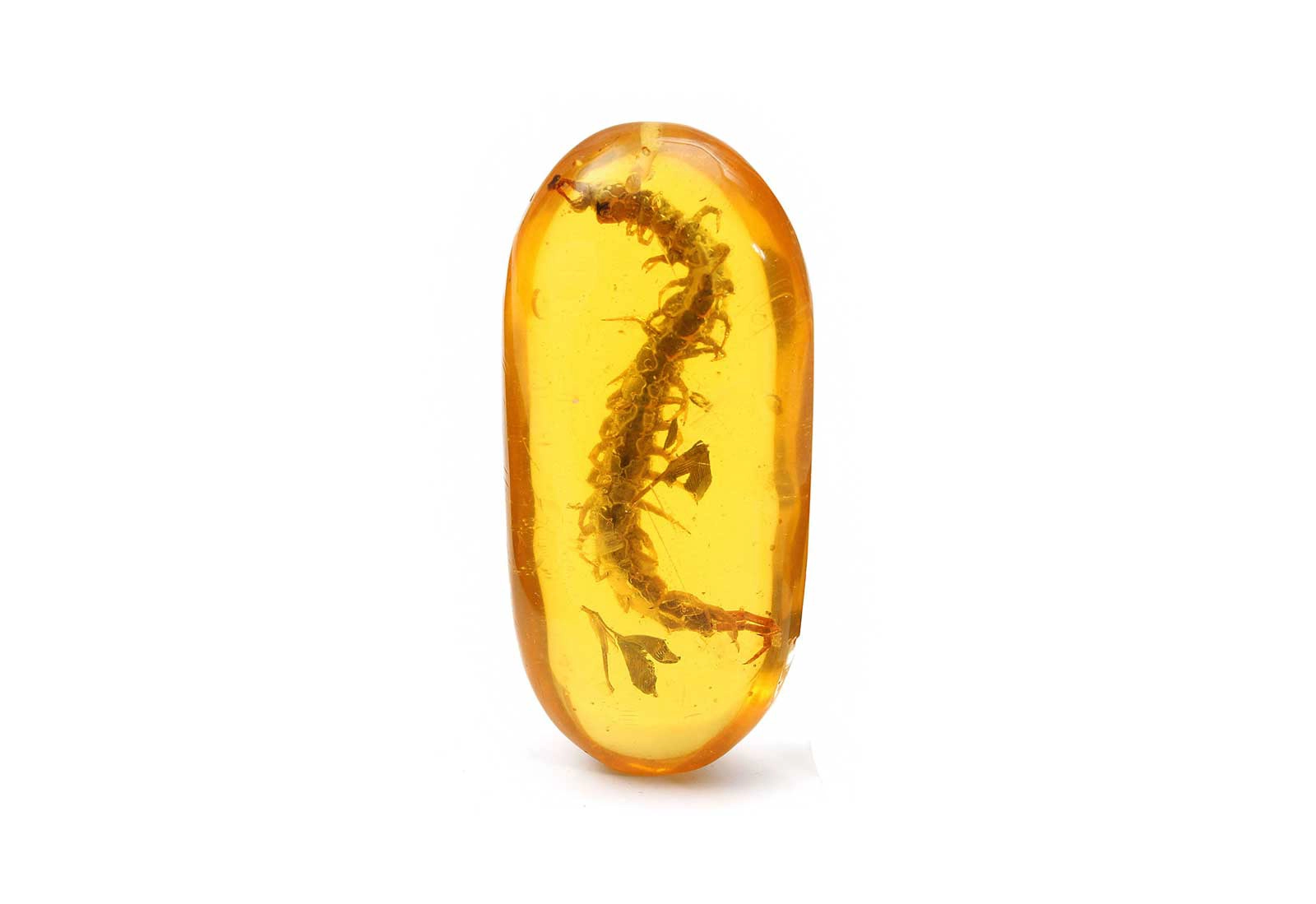
Unlike many transparent gemstones cut to maximise brilliance and fire, amber often speaks through its internal matter: bubbles, veils, plant fragments or animal inclusions. When an inclusion is interesting, legible and well preserved, it can become a central part of the piece's value and narrative.
Month, anniversaries and symbolic value
GIA does not list amber as a traditional birthstone, but in its “Birthstones & Anniversaries” section, it associates it with the astrological sign of Taurus. In a jewellery project, I prefer to view it not as a calendar-driven “mandatory” gemstone, but as a choice rooted in memory: a gift for those who love warm, ancient, lightweight materials with a strong narrative component.
It is particularly well-suited when the piece of jewellery needs to tell a personal story: a pendant, a necklace, an object to be worn close to the body yet protected from knocks. In this sense, it can enter into a successful dialogue with a journey of narrative jewellery, where the gem is not merely decoration, but visible memory.
Geological origin and deposits
Amber is formed from ancient, fossilised plant resins. Some materials are found in the ground; others are released, transported by the tides and found on beaches or coastal areas. The Baltic is considered one of the historically most important areas for amber, in particular the zones that today affect Germany, Poland and Russia.
When buying amber, however, the origin should not be deduced by eye. Colour, transparency or the presence of inclusions are not enough to declare a provenance. For this reason, especially when faced with an important piece, I always recommend documentation and gemmological verification consistent with the stated value.
Colour and visual characteristics
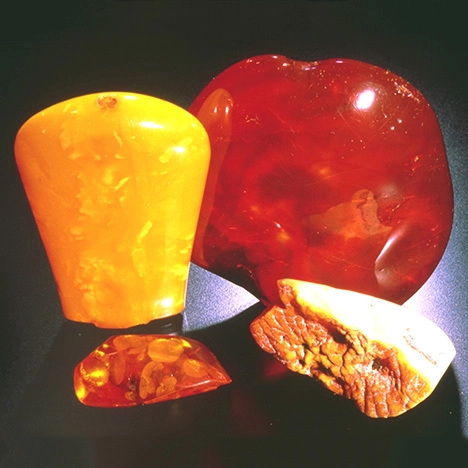
The most familiar colours of amber are yellow, orange and brown, but the range can be wider: golden, whitish, reddish tones, more or less opaque materials and, in special cases, bluish or greenish appearances. Precisely because the colour can be natural, modified or linked to observation conditions, it must be described with caution.
Transparency is another important element. Clear amber allows you to read what it contains better; hazy or bubble-rich amber, on the other hand, can have a more tactile charm. I don't consider one solution to be better in absolute terms: it depends on the design, the type of jewellery and how much the client wants a “clean” gem or a lively, internal one.
According to GIA, amber is predominantly yellow, orange or brown, with rarer variants tending towards green or blue.
Inclusions: the appeal of the time capsule
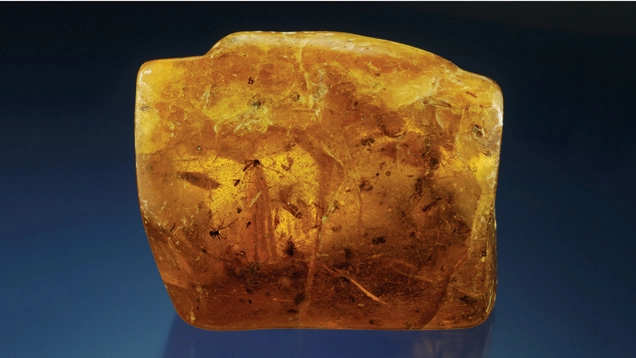
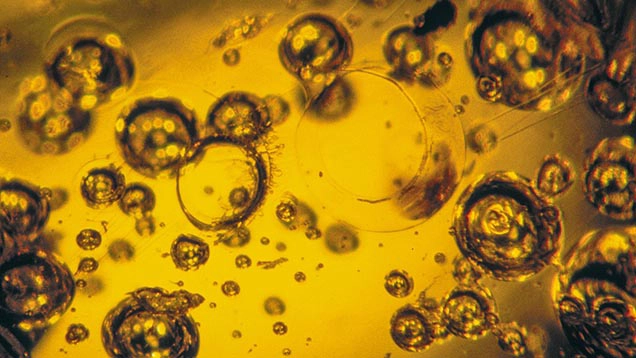
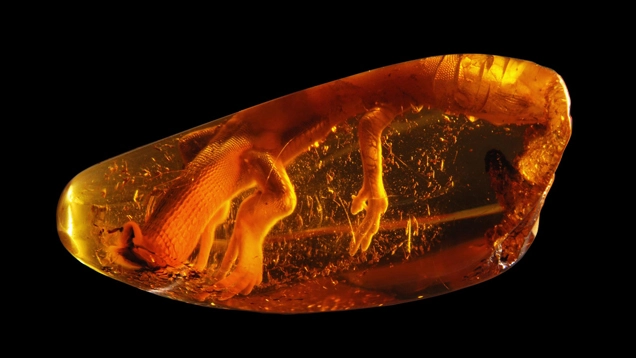
Inclusions are one of the reasons why amber exercises such a strong fascination. They can be plant-based, animal-based or simply internal phenomena such as gas bubbles. In some cases they allow fragments of ancient ecosystems to be observed, but not every inclusion automatically makes a piece valuable. Amber is like a true “time capsule”, because numerous fossil animal and plant species have been identified inside it.
When evaluating a piece of amber with inclusions, I look at legibility, position, integrity, proportion relative to the gemstone, and consistency of documentation. An inclusion declared as an insect, arthropod or other organism should be identified with caution: if it is not confirmed by a caption or an analysis, it is more correct to use prudent terms.
Gemmological technical data for amber
| Classification | Organic gem; fossil resin, not mineral. |
|---|---|
| Composition indicated by GIA | C₁₀H₁₆O. Amber remains a mixture of organic components, not a mineral with a fixed composition. |
| Main colours | Yellow, orange and brown; lighter, reddish, greenish or bluish shades can also appear under specific conditions. |
| Refractive index | 1.540 |
| Birefringence | Not indicated in the GIA report consulted; |
| Specific gravity | 1.08; amber is light and can be surprisingly comfortable even in large volumes. |
| Mohs hardness | 2.0–2.5. |
| Tenacity | Poor according to the GIA care guide: amber scratches and damages easily. |
| Cleavage | Not indicated in the consulted GIA report; for jewellery and mountings, the mechanical protection of the piece is what matters most. |
| Phenomena and visual characteristics | Phenomena and visual characteristics | Inclusions, gas bubbles, possible bluish or greenish appearances in special cases, sometimes linked to fluorescence or treatments, considered rare variants. |
Quality factors: what to look for before buying
Colour
The colour must be pleasant, consistent and well described. Yellow-gold tones are the best known; red-brown tones can be highly sought after; green and blue require greater caution, as they may depend on the treatment or particular lighting conditions.
Clarity and inclusions
Transparent amber can have a higher value than a very turbid material, but a fine plant or animal inclusion can completely change the interest of the piece. The important thing is to distinguish the fascinating inclusion, the defect, widespread bubbles and undocumented claims.
Cut
Amber is often worked into free forms, cabochons, beads or polished elements. It can be faceted, but that is not the most common choice. In bespoke jewellery, I prefer to respect the shape of the material and protect it with soft, non-aggressive settings.
Weight and volume
Lightness is one of the great advantages of amber. It allows for visually striking pendants and necklaces without the weight that many mineral gemstones would have. This makes it interesting for dramatic designs, provided they are not exposed to constant impacts.
Treatments, rare colours and cautious descriptions
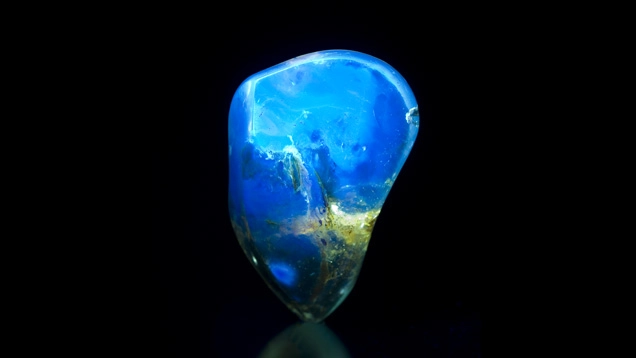
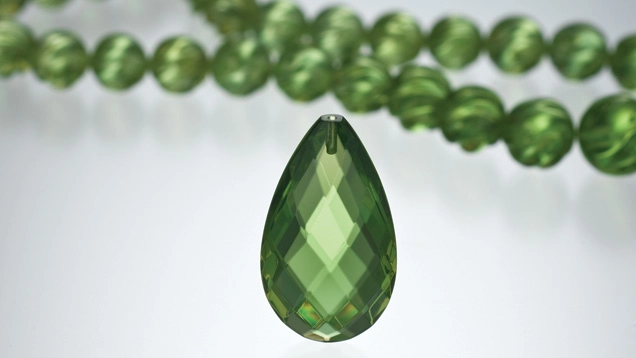
Amber can be modified in colour through heat and dyeing. The GIA classifies amber among the gemstones for which processes exist that can alter colour, apparent clarity or durability, referring to the general section dedicated to gemmological treatments. The GIA also notes that green can be produced with heat and pressure, and that some specimens may appear blue in fluorescent light. For this reason, I would never present a green or blue amber as “natural” or “untreated” without specific documentation.
A treatment does not automatically make a gemstone unsuitable, but it must be disclosed and understood. In a bespoke piece of jewellery, transparency towards the client matters just as much as the beauty of the material: colour, stability and maintenance must be made clear before making a choice.
Synthetics, imitations and related materials
With amber, the practical problem is not just distinguishing a natural gem from a synthetic one, but recognising related materials, imitations, assembled pieces, plastics, younger resins and any modified pieces. Copal is an important case in point: it is fossil resin like amber, but much younger, so it should not be presented as amber without context. In the GIA classification, a distinction is made between synthetic materials, which have properties similar to the gem, and imitations, natural or artificial, which merely reproduce its appearance: in the case of amber, resins, plastics or composites often fall into the category of imitations.
Faced with spectacular inclusions or unusual colours, my advice is simple: ask for documentation, examine the piece with a professional and do not buy based on the photograph alone. Along the way Method and Guarantees, this type of check is precisely meant to avoid appealing but unconvincing choices.
Care and maintenance of amber
Amber is soft: the Mohs hardness given by GIA is 2.0–2.5 and toughness is poor. This means it can be scratched, marked and damaged more easily than many mineral gemstones. It is not a gemstone to be treated lightly.
It must be protected from heat, prolonged light and chemicals. Cleaning should be very simple: lukewarm water, mild soap and careful drying with a soft cloth. In my studio I would avoid steam, ultrasound, solvents, direct perfumes and storage in contact with harder gemstones.
Amber in bespoke jewellery
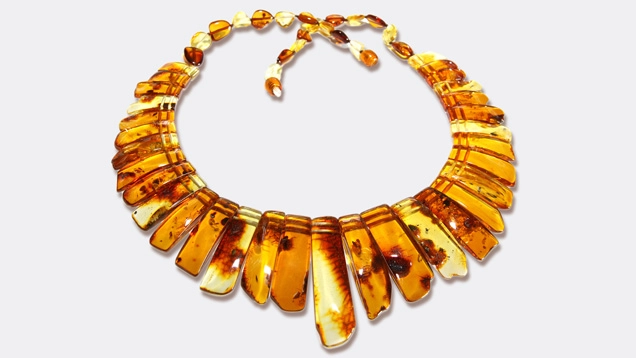
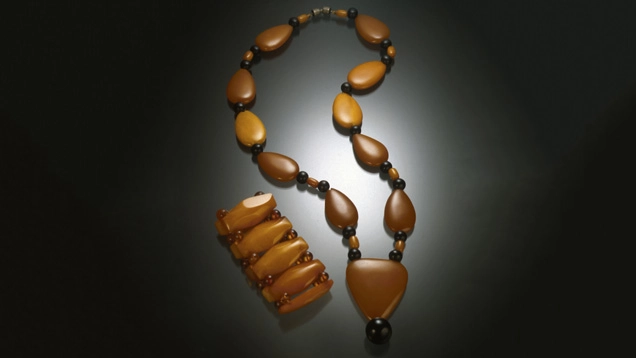
Amber works very well in necklaces, pendants, brooches and sheltered earrings. Its lightness allows for substantial volumes and a warm, almost sculptural presence. In a project of Personalised jewellery, I picture it when the client desires an intimate, narrative gem, less formal than a diamond and more tactile than many coloured stones.
However, I do not recommend it for everyday rings exposed to knocks, scratches and continuous contact with hard surfaces. For a Bespoke Engagement Ring, I would only consider it in very specific cases, with a protective frame and clear expectations regarding maintenance.
Common Errors to Avoid
Consider amber to be a hard stone
Amber is warm and bright, but it does not have the durability of corundum, quartz or beryl. If the piece of jewellery is to be worn every day, the setting must protect it and the customer must know how to look after it.
Calling an undocumented colour “natural”
Green, blue, intense red or particularly clean transparencies deserve a cautious description. Colour can be modified and some appearances depend on the light.
Confuse amber and copal
Copal and amber might look similar, but they are not the same thing. Copal is younger and must be declared as a similar material, not sold as amber.
Buy unverified inclusions
A spectacular inclusion must be accompanied by caution. If the subject is not identified with certainty, it is better to describe it generically than to build value on an unverified promise. In the GIA guide, amber with clearly legible plant or animal inclusions is often considered more interesting than material completely free of inclusions.
Frequently asked questions about amber
Is amber a gemstone?
It is an organic gem, not a mineral. It is used in jewellery for its beauty, lightness and natural history, but it requires more care than many hard stones.
What are the most common colours of amber?
The best-known colours are yellow, orange and brown. Lighter and reddish shades also exist and, in particular contexts, greenish or bluish appearances to be described with caution.
Is amber suitable for a ring?
It can be set in a ring, but I do not recommend it for heavy everyday wear. Its low hardness and poor toughness make it better suited to pendants, necklaces, brooches or protected earrings.
How do you clean amber?
With warm water and mild soap, drying immediately with a soft cloth. Chemical products, heat, direct perfumes, steam and aggressive treatments should be avoided.
Do inclusions always increase value?
No. An interesting, readable and well-documented inclusion can increase the piece's interest, but confused or unidentified inclusions must not be used to inflate the value.
What is the difference between amber and copal?
Both derive from resin, but copal is much younger than amber. For this reason, it must be declared correctly and not confused with amber on a commercial data sheet.
When to choose amber
I would choose amber for a warm, personal, understated piece of jewellery: a lightweight necklace, a pendant with a lovely inclusion, an item to be treasured and worn with care. I would not choose it for someone who wants a worry-free gemstone to wear in any situation.
To compare amber with other coloured gemstones, it may be useful to continue in the section Gemstone Encyclopaedia. The best choice always stems from the dialogue between beauty, real-world use and maintenance.
Want to find out if amber is suitable for your jewellery?
The initial meeting serves to clarify direction, timing, and feasibility. It does not require an immediate decision.
The GIA assumes no responsibility for the content of this article, as the Italian translations have not been checked by the GIA. I am not a GIA associate and the original reference content comes from the site www.gia.edu.